


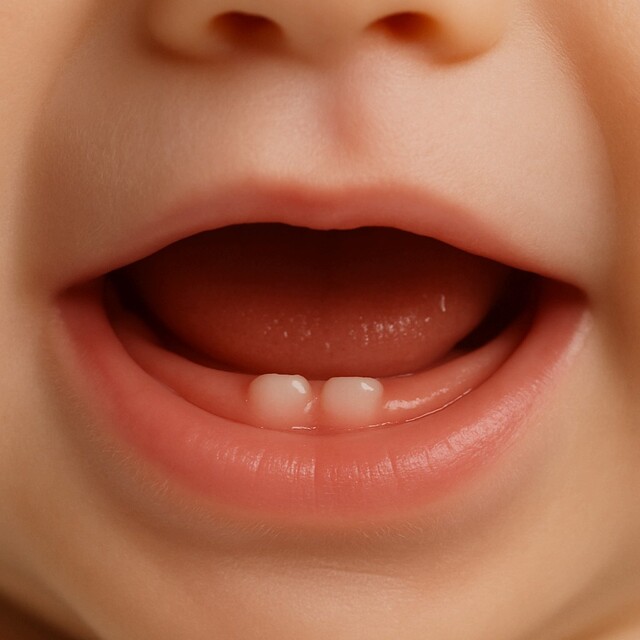
It’s natural to feel torn between wanting to breastfeed for its numerous benefits and fearing it might cause dental problems.
I’m speaking to you as both a dentist and a mother to help make you stress-free about breastfeeding and baby teeth, and their connection to your baby’s long-term dental health.
The World Health Organization (WHO) and the National Health and Medical Research Council (NHMRC), Australia, recommend exclusive breastfeeding for the first six months of life, and continued breastfeeding alongside the introduction of solid foods for at least the first year.
Benefits for baby’s oral health
– Breast milk is rich in nutrients that support strong tooth development.
– Breastfeeding supports proper jaw development and better tooth alignment, and limits sugar exposure compared with formula.
– Breastfeeding stimulates saliva production, which helps wash away food particles and neutralize acids.
– Compared with bottle-feeding, breast milk is delivered slowly and to the back of the mouth, minimizing prolonged exposure of teeth to sugars.
Potential risks
Cavity risk mainly increases when feeds are frequent and continue on demand at night after teeth have erupted, especially if oral hygiene is inadequate—not from breastfeeding alone.
Focus on good daily oral care and avoid routine feed‐to‐sleep once teeth appear to keep risk low.
Protecting mum’s smile
Aim for about 1,000 mg of calcium daily and ask your doctor about supplements if intake is low.
Daily oral care for baby
– From birth: Gently wipe your baby’s gums with a clean, damp cloth after feeds.
– When the first tooth erupts: Brush daily with a soft‐bristled infant toothbrush.
– Sleep routines: After teeth appear, avoid routine feed‐to‐sleep and clean your baby’s mouth before bedtime.
– Let your baby see you brushing and caring for your own teeth to build healthy habits – little ones love to mimic!
Baby dental visits
– Schedule the first dental visit by your baby’s first birthday.
– Continue with routine checkups every six months.
– Early visits help prevent cavities and allow prompt care for issues such as tooth eruption disorders, malocclusion, underdeveloped jaw, nursing caries, tongue-tie (ankyloglossia), and enamel hypoplasia.
Dr. Ana Iyengar,
Cranbourne Dental Centre