
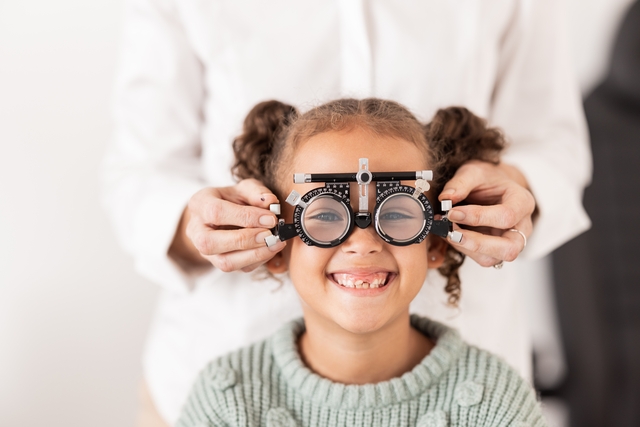
Children could be suffering from hidden vision problems that are going undetected without regular check-ups.
Optometry Australia is highlighting the hidden vision problems that affect millions of Australians, including children.
“Vision problems don’t always come with obvious warning signs,” Optometry Australia’s chief clinical officer Luke Arundel said.
“Too many people assume that if they can still ‘see well enough’, their eyes must be healthy, but that’s not necessarily true.
“By the time some eye diseases cause noticeable symptoms, the damage is already done.”
Optometry Australia recommended that from the time they start kinder, every Australian should visit an optometrist for a comprehensive eye examination every year until age 18, then every two years as an adult.
A 2023 study by the Brien Holden Vision Institute found that 36 percent of Australians were myopic – a number expected to top 50 percent by 2040 if trends continue.
Children are being diagnosed younger, their prescriptions are progressing faster, and high myopia (5.00D or worse) is on the rise.
“Childhood myopia is one of the fastest-growing challenges we face in eye health,” Luke said.
“The earlier it develops, the greater the risk of serious complications later in life.
“The good news is that regular eye exams give us the chance to detect and manage it early, protecting children’s vision for the future.”
Recent research commissioned by Optometry Australia and UNSW found that 21 percent of Aussies had never heard of myopia; 32 percent knew the term but couldn’t name any symptoms; 85 percent didn’t realise that treatment could slow down its progression; and 59 percent were unaware that having myopia could lead to visual health consequences later in life.
Luke urged parents to think of an eye exam like a dental or health check-up.
“Regular eye checks aren’t just about maintaining vision; they’re a vital part of overall health, helping to detect issues early, protect independence, and ensure people can continue living
their lives to the fullest,” he said.