

By Casey Neill
The most joyful family home reflects all its inhabitants – not just the grownups.
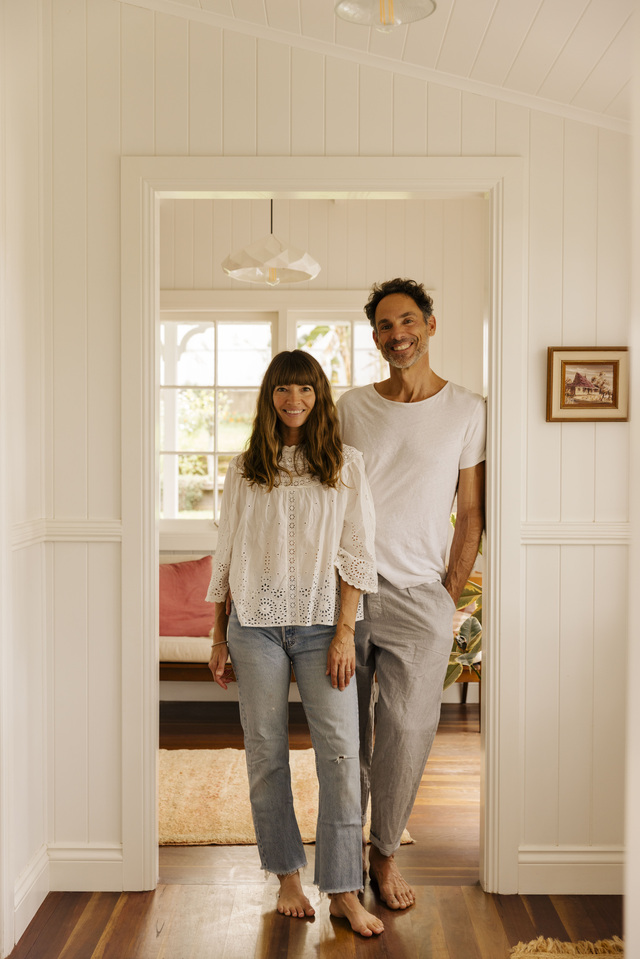
Courtney Adamo doesn’t just believe this sentiment; she lives it, and has done for 20 years.
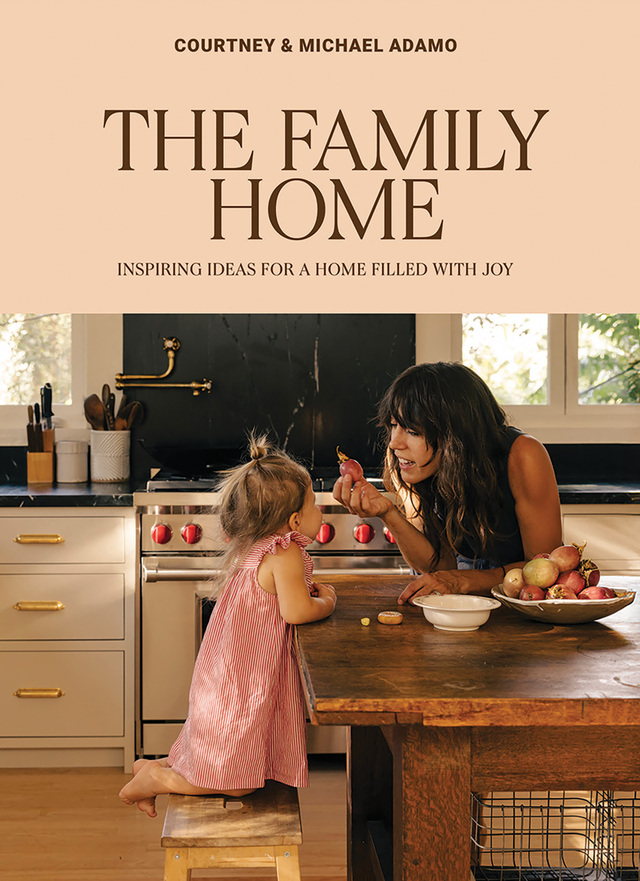
So the mum of five, businesswoman, blogger, and author, with husband Michael, created a guide to help other parents achieve a home filled with joy.
The Family Home covers both temporary and forever homes, drawing on the Adamos’ many moves.
Born in the US, they moved to London as a new couple in 2003 and lived there for 12 years before travelling the world with their young family and settling in Byron Bay.
“Each new experience provoked us to examine how we were living, the home we were making for our children, our values and our priorities,” Courtney wrote.
Courtney was the co-founder of Babyccino Kids, one of the first family lifestyle and parenting blogs in the UK, and has since created online courses, e-books, and a membership program that connects her with parents worldwide.
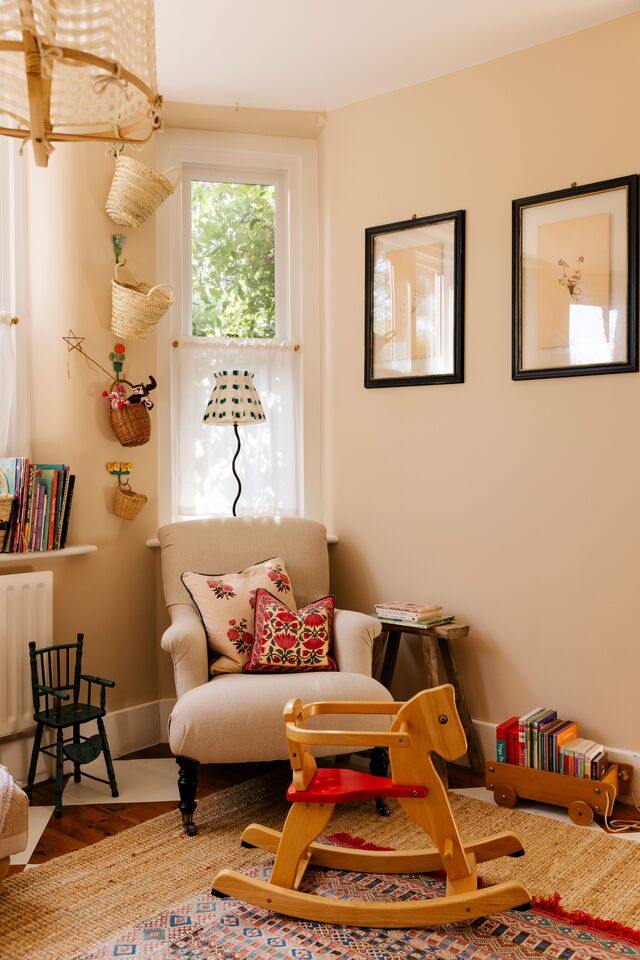
The Family Home features photos from dozens of unique family homes, plus simple and impactful ideas to create a warm, welcoming, and fulfilling abode “where family life flows easily”.
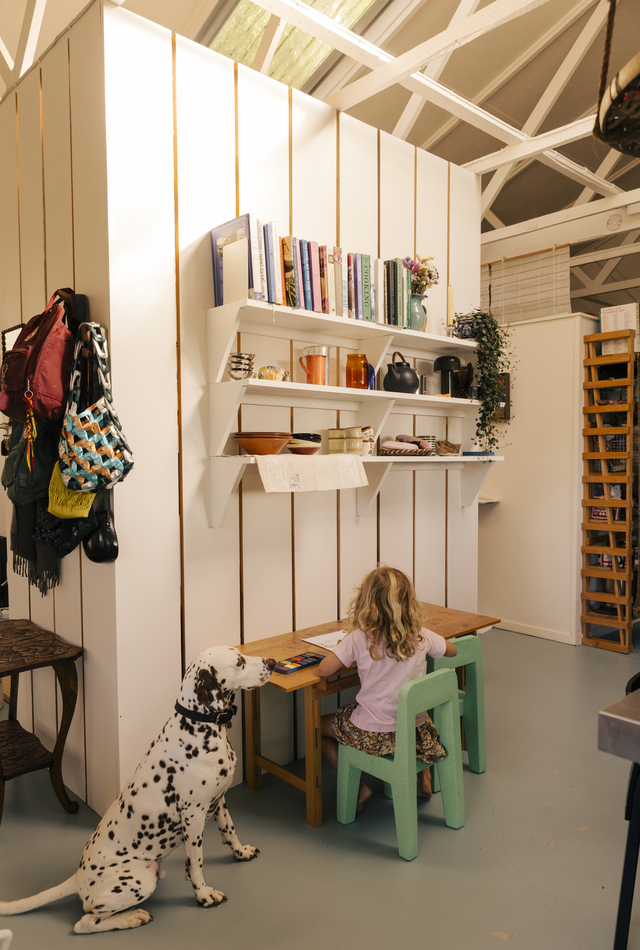
Tips range from choosing the perfect dining table and family couch, to setting up a communal workspace for family productivity, and maximising small spaces with wall mounting and multi-purpose furniture.
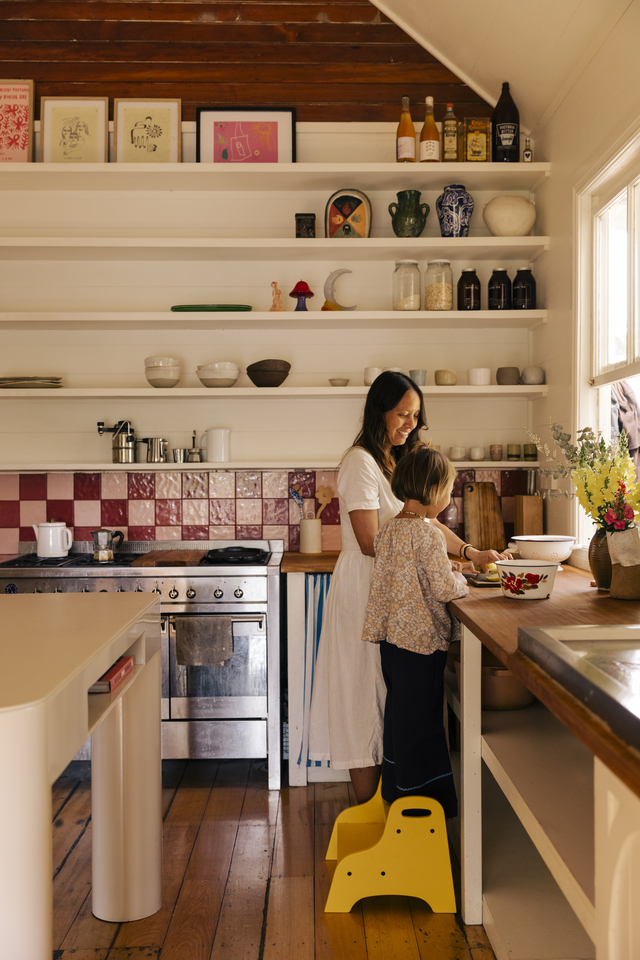
Courtney and Michael urge readers not to be afraid to put the everyday on display, and to ensure usability for the home’s youngest residents.
“The more independent kids are, the more they contribute,” Courtney said.
“We’ve also learnt that the earlier you start encouraging children to take responsibility for personal tasks or chores, the sooner these will feel like a natural part of family living.”
Invite play around the house by using toys as decor and keeping board games accessible.
“In an age of digital entertainment, board games and puzzles offer a refreshing, real-world alternative,” Courtney said.
And the dozens of priceless works of art your children churn out? Throw them away without guilt.
“Rather than storing our kids’ works for some imagined future day when we’ll sit together to reminisce and admire them, we try to appreciate and celebrate them in the moment,” Courtney said.
After devouring The Family Home, we quizzed Courtney for even more advice.
Q. I love that a home filled with joy is the aim. How did you decide on that?
A. There are so many beautiful interiors books that focus on what the home should look like.
But when it comes to family homes, there are so many more factors to consider.
We wanted to create a book that shares tips and ideas for creating a more thoughtful space, one that works well for your unique family, allows family life to flow well, and is a joy-filled place to live.
I guess it’s our biggest priority as parents – creating a happy home for our family – so we set out to share the lessons we’ve learned and tips we’ve gathered over the last 20 years of parenting.
Q.You write a lot about children having a role in shaping their home, not just their parents. What’s an example of a way your children shaped your home for the better?
A. There are little signs of children in every single room of our house!
Currently, there’s a birthday wish list and watercolour painting taped on our fridge.
There are Lyra coloured pencils in jars on our bookshelf by the cookbooks.
There are spinning tops in a basket on our coffee table and wooden puzzles, too.
There’s a basket of Schleich animals in our living room, and another basket of Magnatiles. There are children’s books on the shelves in several rooms.
We have framed the kids’ artwork and hung those up on walls.
There are backpacks on hooks and little Blundstones lined up by the door.
Our house is not overrun by kiddie stuff, but it’s there in every room, because our kids live here too.
I love the colour that children’s stuff brings into our home, and the whimsical nature of their things.
Q. Was there a time you had to draw the line and say no to one of your kids’ design ideas?
A. When our first baby started pulling himself up and standing, we bought him this plastic table that played music and had flashing lights and made all sorts of loud sounds.
It was an eyesore, but we thought it would keep him happy.
Every time he had a little friend come to play, they always fought over that toy, and they actually didn’t play well.
I learned quickly that these sorts of toys don’t engage the child or allow for imaginative play.
Yes, they quickly grab the child’s attention, but they don’t hold it.
Plus, they’re really unsightly, obnoxious, and break quickly and end up in landfill.
We donated that toy, and it was the last plastic, battery-operated toy we’ve ever bought for the kids.
I love having toys in our home that are open-ended and encourage a more engaged type of play.
Q. The book is a wonderful guide for people embarking on their parenthood journey – a blueprint to help start off on the right foot. But what’s your advice for those already in the throes of parenthood and wanting to make change in their home. Where should they start? What should they prioritise?
A. I think there are always little tweaks or additions we can make to our home to make it suit our lifestyle.
Even as our children grow, our needs change. I think it’s always a good idea to really think about your family’s priorities — what rituals do you enjoy together, how do you like to spend time at home?
There are also practical things to consider like are there enough hooks for the backpacks and coats and are those hooks hung where kids can reach?
Do you have enough hooks in your bathroom so kids can hang their towels up easily?
Do you need to declutter your child’s closet so they can easily get themselves dressed?
Does your arts and crafts cupboard need to be organised better so kids actually use the craft supplies?
What about your games cupboard? We recently organised our games cupboard and took a bunch of games and puzzles to the op shop, and doing this actually encouraged our kids to play with the games that remained in the cupboard!
Q. You write about encouraging independence through chores and responsibility. How do you balance that with letting kids be kids?
A. We’ve always believed that kids can be both responsible and playful at the same time – it’s
not one or the other.
In our experience, children want to contribute meaningfully to their environment – it gives them a sense of belonging and purpose.
So when we invite our children to help with chores, we’re not burdening them with ‘adult work’, but rather offering them real, hands-on experiences that strengthen their confidence and capability.
We’ve also found that giving our children some say in the chores they do makes a big difference.
When they choose their own tasks, whether it’s feeding the pets, setting the table, or hanging laundry, they feel a sense of ownership and pride.
It becomes their contribution to the household, rather than something imposed on them.
Of course, we guide them toward age-appropriate responsibilities, but the choice gives them autonomy and helps them stay engaged.
Over time, these small acts of responsibility add up to a real sense of competence – and that, in turn, allows them to play and explore more freely, knowing they are trusted and capable members of the family.
Q. If your readers take only one thing from this book, what would you like it to be?
A. I’d love for readers to feel encouraged to make more thoughtful choices in their homes – to
be intentional about what they bring in, how they organise their spaces, and how they live
within them.
So often, our homes fill up without much thought, but with a bit of care and attention, they can become places that truly support and reflect who we are.
I hope people come away feeling inspired to create a home that feels like them – one that tells their family’s story, aligns with their values, and allows everyone who lives there to thrive.