

By Casey Neill
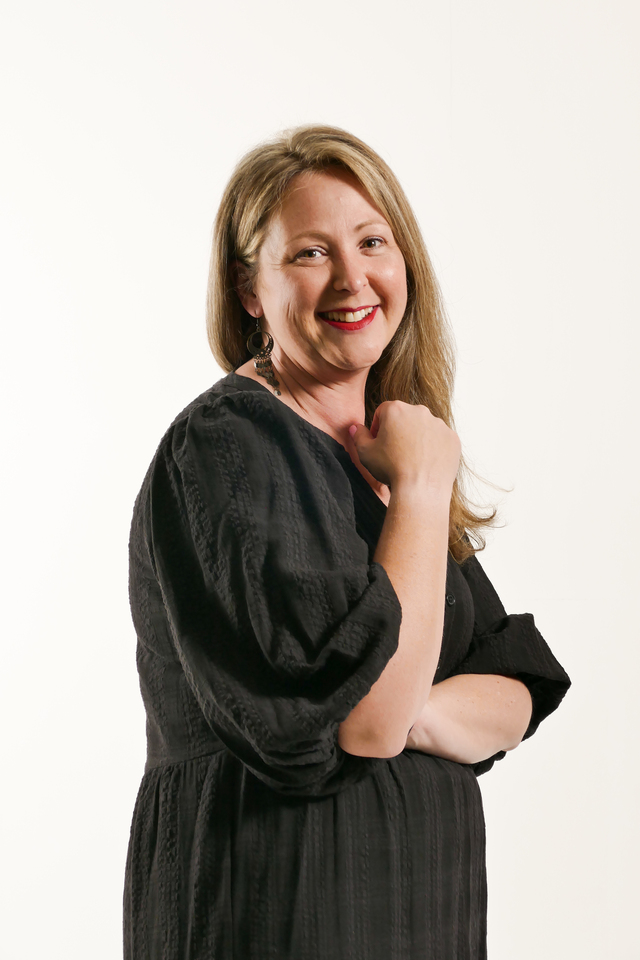
A friend asked Alicia Cohen to speak with her about mainstream schooling her special needs child.
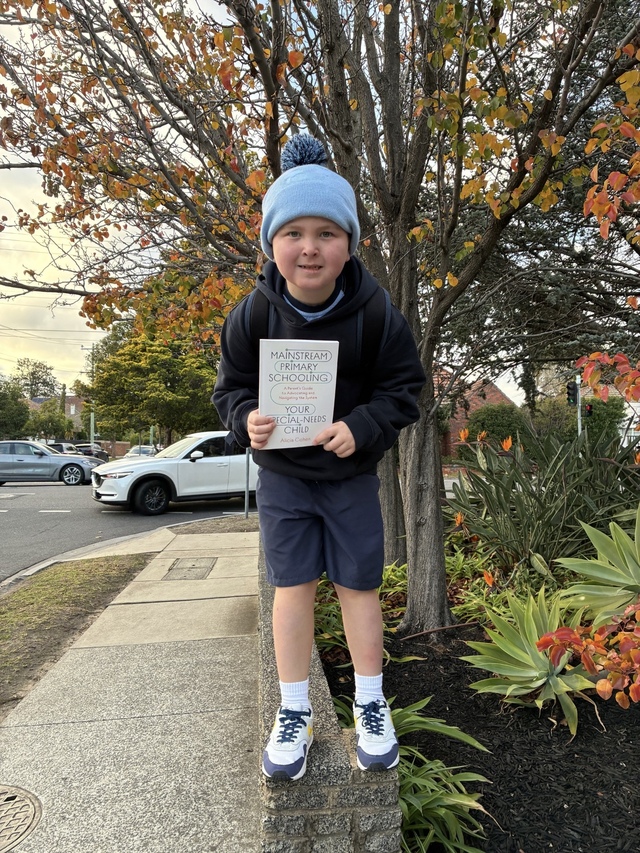
When life delayed their chat, Alicia wrote a book: Mainstream Primary Schooling Your Special-Needs Child.
The mum of two and Amba Press publisher drew on her experience with her son Remy and added first-hand accounts from teachers, therapists, and other parents.
“I wrote it because it doesn’t hurt to have an extra cheerleader,” she said.
“I do want other people to feel like they’ve got some knowledge and some ability in this area to advocate for their child.
“I’m a reluctant advocate.
“I’m just a mum who reads lots and likes to talk to people.
“The more knowledge you have about the system, the better your experience is going to be for you and your child.”
When Remy was struggling to speak at age 2.5, a kinder teacher recommended he see a speech pathologist, who recommended a paediatrician.
They diagnosed autism spectrum disorder (ASD) level three, an intellectual disability, and severe communication challenges.
“There is nothing like the moment of having a suspected diagnosis confirmed,” Alicia wrote.
“The future you imagined suddenly shifts, and you find yourself at the beginning of an unexpected journey.
“The word disability can feel confronting when you’re still processing what your child’s condition means for their future.”
But Alicia tells parents and carers that the diagnosis won’t change, so the sooner they come to terms with it, the better – especially for their child.
“Accepting your child’s diagnosis allows you to be more present for both celebrating the positives and navigating the difficulties with greater resilience,” she wrote.
Deciding to send Remy to a mainstream primary school followed plenty of research and debate.
“Would a mainstream environment overwhelm him? Would a specialist setting limit his potential?” Alicia wrote.
“What became clear was that there is no universal right answer.
“The best choice depends on your unique child, your family circumstances, your available options and your values.”
Alicia said Remy was having a great schooling experience.
“There are hard days, of course, but every single day we’re so grateful for the experience,” she said.
The final stretch of their walk to school is a ringing endorsement for their choice. Remy is a picture of joy.
“He turns the corner and he runs flat out to the classroom and squeals the whole way,” she said.
Wanting Remy to have the same educational experience as his younger sister and to be part of the local community were key drivers for placing him in a mainstream school.
“We wanted the most typical childhood possible for him, believing that a more ‘normal’ childhood would lead to a more normal life,” Alicia wrote.
Exposing his classmates to disability has been a bonus.
“I think it’s so important for us to see a cross-section,” Alicia said.
“One in 10 has a disability.
“I think all schools should be having conversations about differences.
“I go on the excursions to have a chat. I invite the kids to ask questions.
“We get to have really good conversations about how the brain works.”
Ensuring the school experience is fair, inclusive, and equitable for Remy drives Alicia’s advocacy.
“I advocate every single day,” she said.
“I will pick up things and nip them in the bud.
“But I also don’t see myself as a difficult parent. I do it with a smile as much as I can.
“I guess I think if I can stand up and make a difference, the next child coming through will also benefit.”
For example, Remy’s enrolment is required to be reviewed at a meeting each term.
“What an opportunity to get everyone in the room,” Alicia said.
“Some schools palm them off.
“I want that conversation every term. It’s my right, and my son’s right.”
Alicia also asks Remy’s teachers to meet with him before the first day of school.
“I have to ask the teacher the year before, ‘Can I have your number so I can text you over the holidays? I know you’ll be setting up the classroom, we just need 15 minutes’,” she said.
“It changes his whole settling-in process.
“Ask the question.
“The school won’t automatically know what your child needs – you have to ask.”
Staying on top of every appointment, form, and requirement involved with Remy’s schooling and care is a full-time job.
“It is a huge amount of work,” Alicia said.
“No one can take that work away from me. I have to lead it all.
“You meet all these professionals, but nobody knows your child the way you do.
“It’s a bit of trial and error. It’s a bit like parenting generally.”