

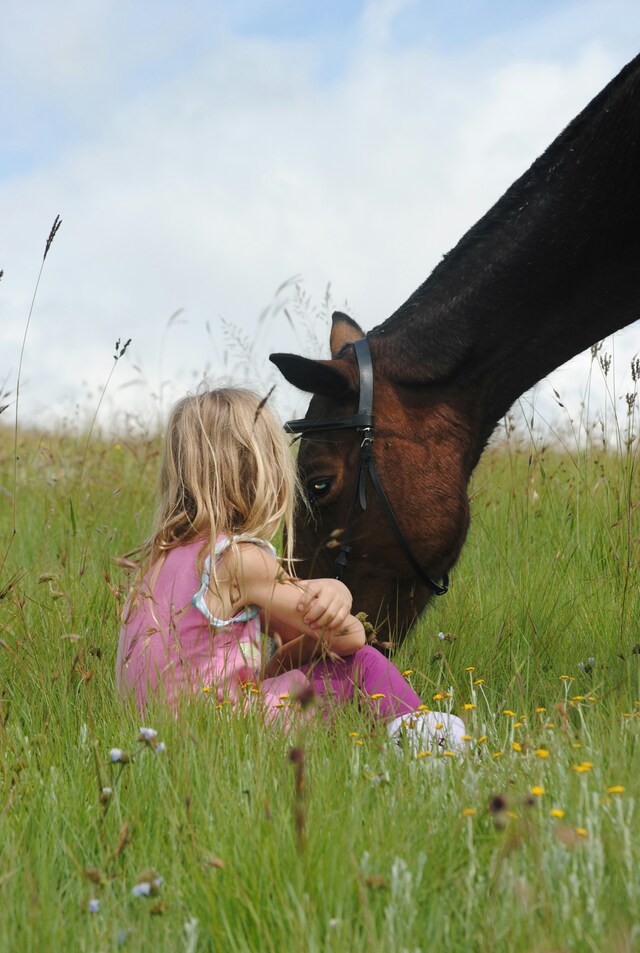
Equine-assisted therapy needs formal recognition, ethical guidelines and proper funding so it can reach more children, a new study has found.
University of South Australia social work graduate Morgyn Stacy led a study of 10 social workers and mental health practitioners delivering equine-assisted interventions (EAI) to children.
She said many children didn’t respond to sitting in a room with a therapist or clinician, which could be intimidating.
“But give them the space to be outside, to connect with a horse, and something powerful happens,” she said.
“They begin to feel safe, calm, and ready to open up.”
Morgyn said horses were highly sensitive to human emotions and body language, allowing them to mirror and respond to a child’s emotional state.
They offer a natural, non-judgemental environment, building trust and emotional safety.
The natural, open-air setting – often in paddocks surrounded by trees and wildlife – helps children feel relaxed and grounded.
“The benefits go beyond mental health,” Morgyn said.
“Children often gain confidence, improve communication skills, and build stronger emotional resilience.”
Even children who were initially afraid of horses found strength in overcoming their fears, the research found.
Senior UniSA researcher and qualified social worker, Dr Fatin Shabbar, said EAI were particularly effective for children who had experienced trauma.
“Practitioners in the study described deeply moving examples of children bonding with horses in ways that sparked emotional breakthroughs where other therapies had failed,” she said.
But sessions can be expensive due to the cost of caring for horses and maintaining rural properties.
Unless families receive funding from bodies such as the NDIS and child protection agencies, many are forced to pay out of pocket or miss out altogether.
“Another concern is the lack of regulation in Australia,” Dr Shabbar said.
“Without clear guidelines, unqualified practitioners may offer equine-assisted services without appropriate training, which puts both children and the animals at risk.
“And those practitioners who are highly qualified still face an uphill battle to gain recognition of equine-assisted therapy as an evidence-based practice.”
The researchers said the findings were a strong call to action for professional bodies like the Australian Association of Social Workers (AASW) to provide clearer guidance and ethical standards for working with animals in therapy.